
3 Things Imposter Syndrome Doesn't Want You to Know About Making Art
If you want to make money from the art you love to create, you can't afford to waste your time letting imposter syndrome boss you around.
Case in point: I always wanted to be an artist and have a creative career, so I decided to study art in college and graduated with a bachelor's degree. I soon found out that having a college education in art and design didn't stop me feeling overwhelmed when it came to making art and putting it out into the world.
The problem was, every time I sat down to make art, I felt like I needed to have a plan, and I had to make a masterpiece. It added so much pressure to my creative practice that making art wasn't fun—it was stressful! Instead of drawing because I loved it, I was setting myself up to be disappointed.
In fact, I was so filled with self-doubt that I sometimes used all of the time I set aside to make art worrying about what to draw, hating what I did make because it wasn't "professional enough", and getting frustrated when I used my expensive art supplies to draw or paint something that I thought was, well, bad art!
Eventually I decided that enough was enough. I was sick of walking away from my art practice feeling empty and like my art didn't matter. It was time to face my imposter syndrome head on, and in order to do that, I had to change my whole mindset around how I sat down to draw, how I talked to myself while making art, and the supplies I thought I needed to use in order to make "good art."
1. You don't need an idea of what to draw in order to make art.
Nope! It feels counterintuitive, but if your goal is to keep up with a daily drawing practice and improve your art skills, you can just show up with paper and a pencil, markers, or your Apple pencil and iPad. Being scared of the blank page is very common for artists, and it was what limited me the most. Here's how you solve the problem: You can just put marks on the blank page. You can draw boxes, you can make squiggles and shapes.
Just get started and pick up your pencil or crayon. The more you stay dedicated to sitting down and moving your hand, and making something—anything—the more you'll start to see that fear of the blank page go away. You'll start to have a light bulb moment and feel inspired. Maybe you'll make something great after starting out with a few practice shapes or squiggles. Maybe not. Either way, you are helping your creative resilience by sitting down and drawing something no matter what.
2. It's okay to make "bad" art.
A lot of times, I would avoid making art at all because I didn't want it to be "bad." However, that limited my creative art-making because that meant I did less experimenting since I was so focused on what I made turning out to be something that looked professional. When you try new things with your art, they don't always turn out "great" or even "good" the first time.
This also meant that I wasn't really finding my own unique creative voice because I was afraid. It took me a while to figure out that fear because my inner critic was disguising it as perfectionism. I would always compare my art with other artists online and would think that my art wasn't as good as all the artists whose work I saw on the internet. If I made something I didn't love, I would feel really bad about it and feel like that was proof that I didn't know what I was doing.
Turns out, that was my imposter syndrome trying to keep me small.
The best way to overcome that fear of "bad" art is to make lots of art. When you make lots of art and you say, well, I'm going to sit down to make something right now, even if I don't love it, it was still good practice. You start to move the needle, and you start to quiet that inner critic.
3. You don't need fancy art supplies to make good art.
When I buy nice art supplies, it sometimes feels like I can't use them unless I'm going to make something amazing. Do you do this too?
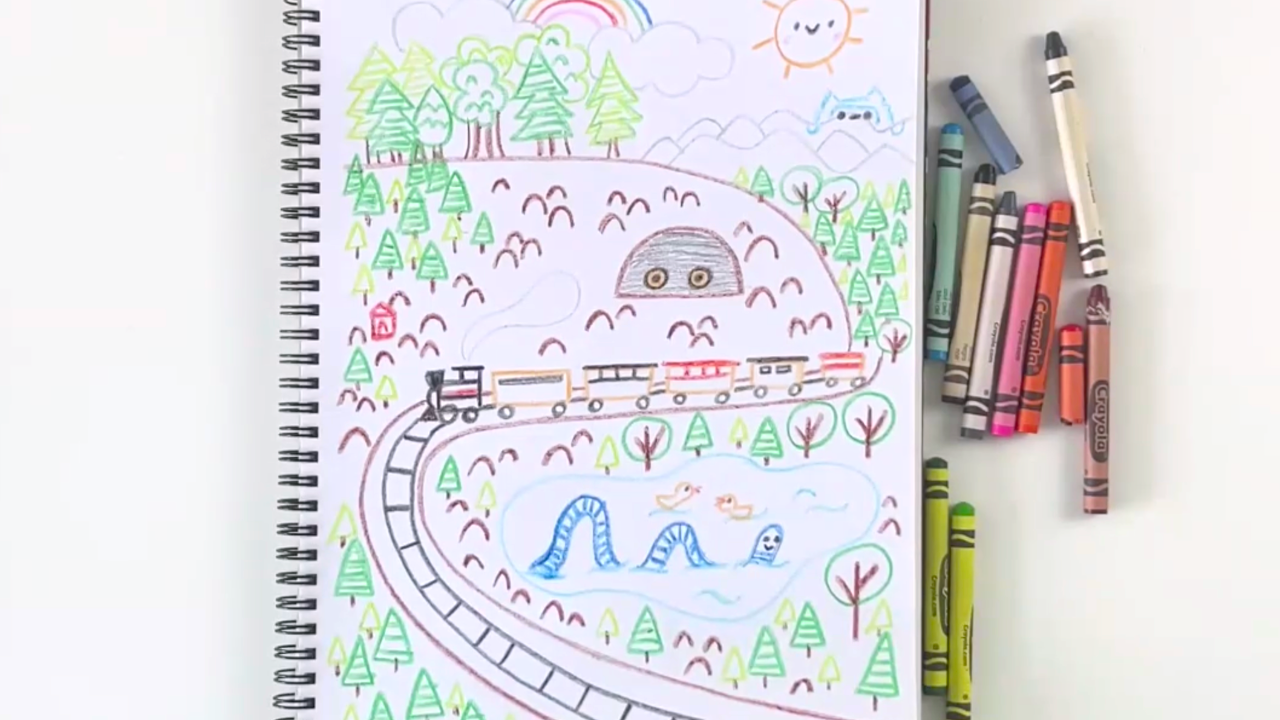
I realized that if I really wanted to experiment and have fun (and not worry about "wasting" the precious art supplies I spent money on), I had to come up with a way that let me use materials that I wouldn't feel bad if my art didn't turn out how I wanted. That's how I got into drawing with crayons again!
There is no gatekeeping when it comes to making your art everyday. Find that box of crayons that you got your kids for elementary school in the junk drawer or supply closet and reclaim them! Cut up squares of printer paper, and use one square for each day if your sketchbooks feel too precious to make experimental marks in.
If you put some marks down that you're regretting, you're not alone.
I see "good" art as any art that you make!
Go Make the Art That Wants to Come Out of You!
Listen when I tell you this: Even if you don't feel good about what you just drew, that's not what's important. Remember the lies your imposter syndrome is telling you and that you didn't come here to make a masterpiece today. You came here to exercise our creativity. And that's what you did. So you succeeded. Even if you don't love what you made, you succeeded with that. Because you showed up, you drew something!
And it's going to pay you forward. Whenever you give your creativity some time and some love, it will pay you back. I promise you.
Ready to combat the fear that's holding you back from making the art that wants to come out of you?
Learn the transformational tools for making art you love and that others are drawn to with my free guide.
Plus get the Phases of a Soaring Artist roadmap to show you the exact steps to take to get there!
Hi!
